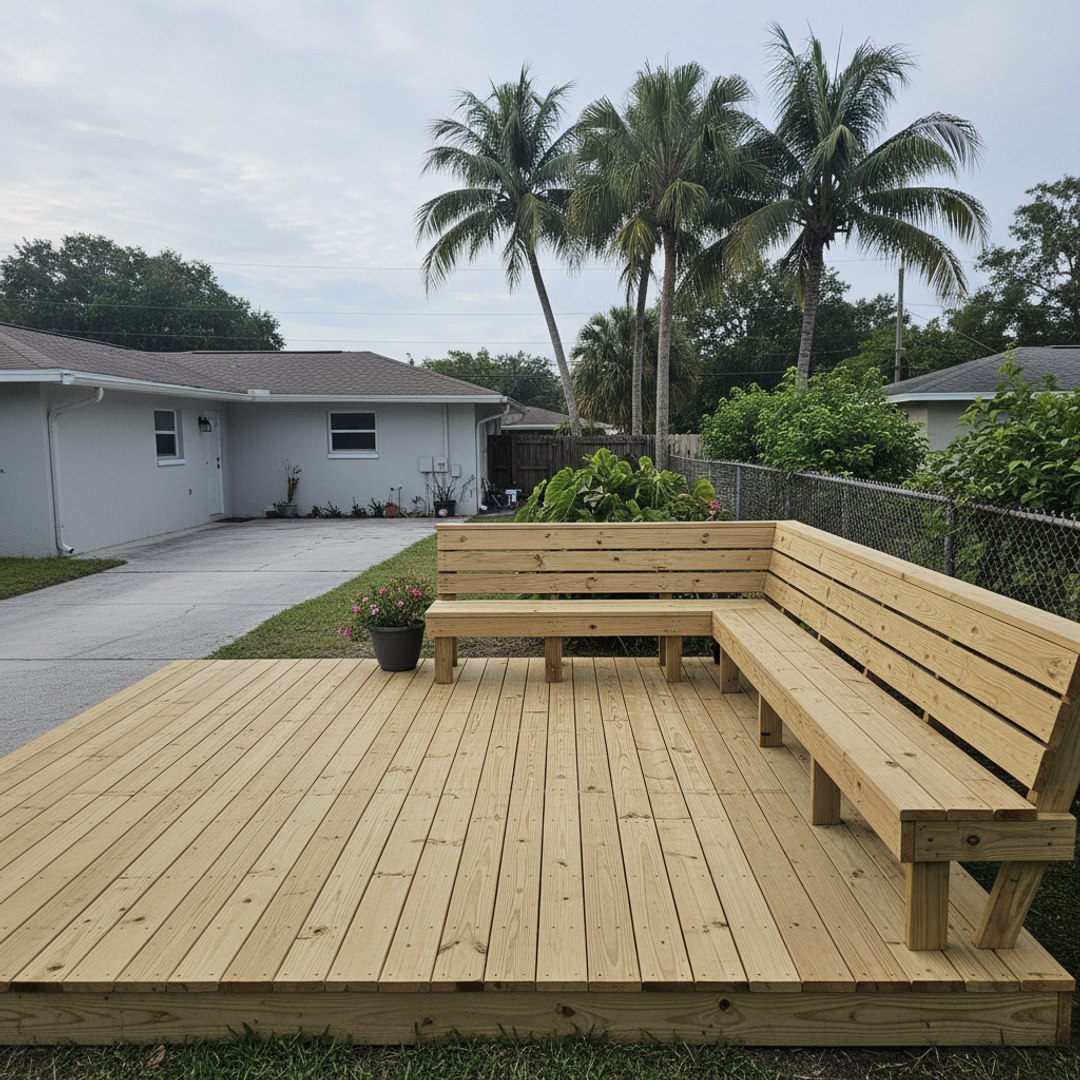
Ask five deck builders in Polk County when to schedule work and you'll get five answers built around one thing: water. Not the lake kind, though that matters too if you're near Hollingsworth or Parker. The rain kind. Lakeland sits in a part of Florida that gets a genuine wet season, and that single fact drives more scheduling decisions than heat, cold, or anything else.
The rainy season is the real obstacle, not the heat
From June through September, Lakeland gets afternoon thunderstorms most days. Not drizzle. The kind that dumps an inch in 20 minutes and then clears up by dinner. For a deck build, that means footings can sit in standing water overnight, concrete can't be poured on schedule, and lumber that gets rained on twice a week never gets a chance to dry out between coats. Staining and sealing are hit hardest. A stain needs the wood dry and the air dry for at least 24 to 48 hours after application, and in July that's a gamble most days won't pay off on.
Heat on its own isn't the problem. Composite boards expand in the sun regardless of month, which is why gapping specs matter more here than in cooler states, but a 95-degree dry day in April causes fewer headaches than a 88-degree day in August with 90 percent humidity and a storm cell building over Highland City by 2pm.
October through May is when the work actually moves
The dry season here runs roughly October to May, and it's not subtle. Rainfall drops off hard after hurricane season winds down, humidity drops with it, and you get long stretches of clear days back to back. That's when concrete footings cure properly without a rain delay pushing the pour out a week, when stain and sealant actually bond the way the manufacturer's data sheet says they will, and when a crew can frame, deck, and rail a structure in the timeline they quoted you instead of the timeline the weather allows.
It's also the window when screened-in additions go up fastest, since the aluminum framing and screen install depend on calm, dry conditions more than almost anything else in this trade.
Hurricane season changes the math, not just the weather
June 1 through November 30 is hurricane season in Florida, and Lakeland, being inland, doesn't take direct hits often, but it absolutely takes the rain bands, the wind gusts, and the occasional tropical storm that stalls over Central Florida for two days straight. Scheduling a deck build in August means building in buffer days for storm delays that may or may not show up. It also means any materials left on site need to be tarped and weighted down properly, because a sheet of plywood catching wind on a job site is a real hazard, not a hypothetical one.
Most builders here, including New Look Deck Co, push bigger jobs like full installs and rebuilds toward the dry months and save the smaller work, repairs, board swaps, railing fixes, for whenever the calendar has room.
What the ground does in each season
Lakeland sits on mostly sandy soil, which drains fast and is honestly a good base for footings compared to the clay you'd deal with further north in Georgia. But sandy soil saturated by three straight months of afternoon storms behaves differently than sandy soil in April. Footing holes dug in September can fill with groundwater before the concrete truck even arrives, especially on lots closer to one of the lakes where the water table sits higher. In the dry season, that same hole stays open and stable, which matters more than people expect when you're setting posts at the 24 to 36 inch depth most footings here call for.
Permits don't care what season it is, but inspections get backed up
The City of Lakeland and Polk County both require permits for most deck construction, and that process doesn't speed up or slow down with the weather. What does shift is inspector scheduling. Spring is the busiest stretch for permitted work across the county, since everyone who waited out the wet season books their project at once, and that can mean a longer wait between the framing inspection and the final sign-off. If you're planning a build for March or April, it's worth applying for the permit earlier than you think you need to, because the paperwork can take longer than the actual construction.
If your property is in one of Lakeland's HOA neighborhoods, Christina or Grasslands for example, add the HOA design approval step before the permit even gets submitted. Older neighborhoods closer to downtown, like Dixieland or around Lake Morton, usually skip that layer entirely, but the homes themselves tend to have older electrical and plumbing runs near the planned deck footprint, which is its own scheduling wrinkle no matter the month.
So when should you actually book the work
If you want a new deck, a full rebuild, or a screened addition, aim for a start date between October and April. You'll get fewer rain delays, better cure conditions for concrete and stain, and a crew that isn't racing a storm cell to finish framing before 3pm. If you need a repair, a board replaced, a railing tightened, that work can happen almost any month, since it's smaller in scope and less dependent on multi-day dry stretches.
Staining and sealing is the one job where timing really is everything. Do it in peak summer and you're fighting humidity the whole way. Do it in January or February, when the air is dry and the temperature sits in a comfortable range for the sealant to cure, and it'll hold up noticeably longer before the next coat is due.