Every job below is one we do ourselves across Lakeland.
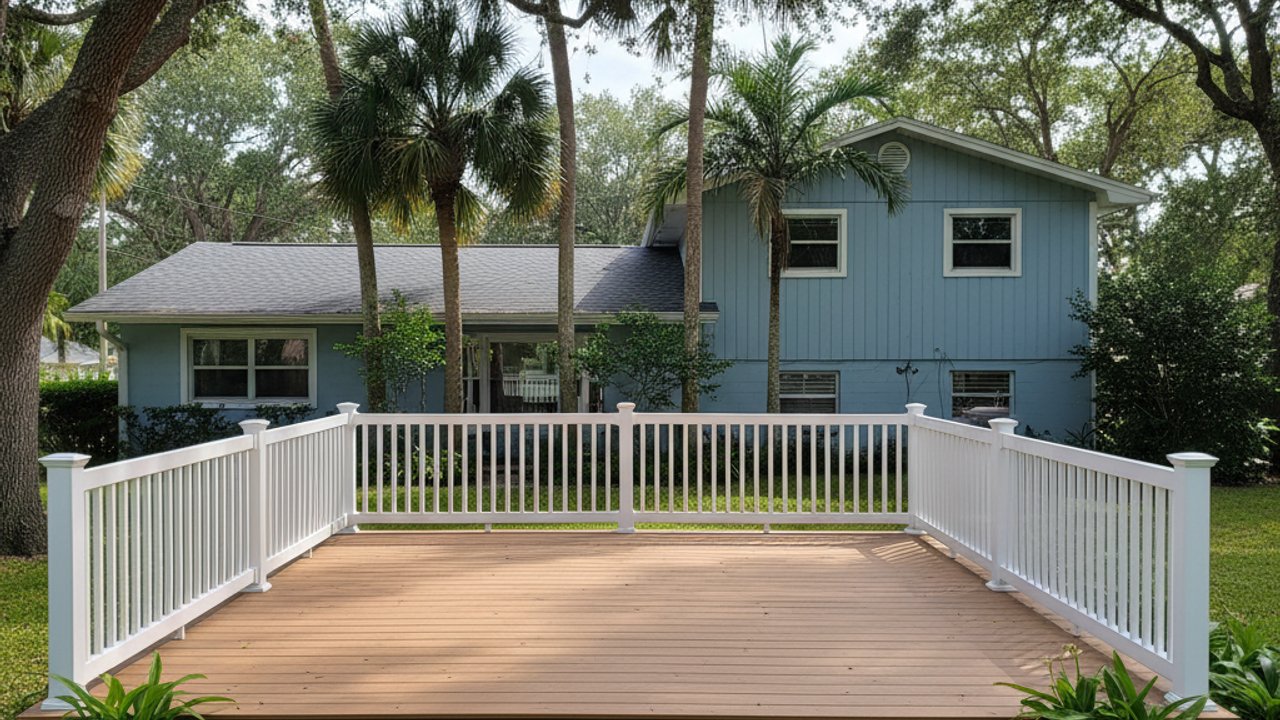
New deck builds start with footings sized for Florida wind load, not just whatever hole a shovel makes easy. Joists get set 16 inches on center and the ledger board gets flashed before the first board goes down, since that's where most decks start rotting from the house out.
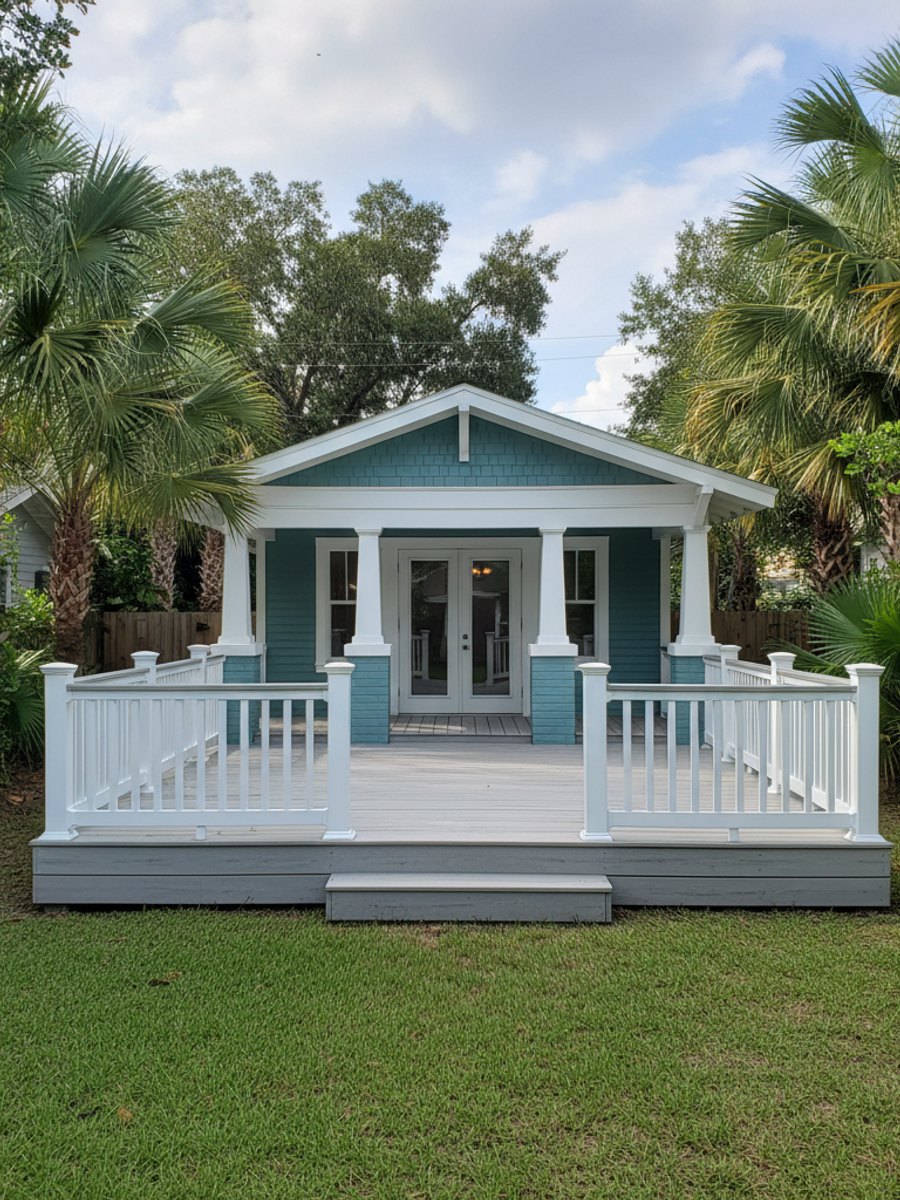
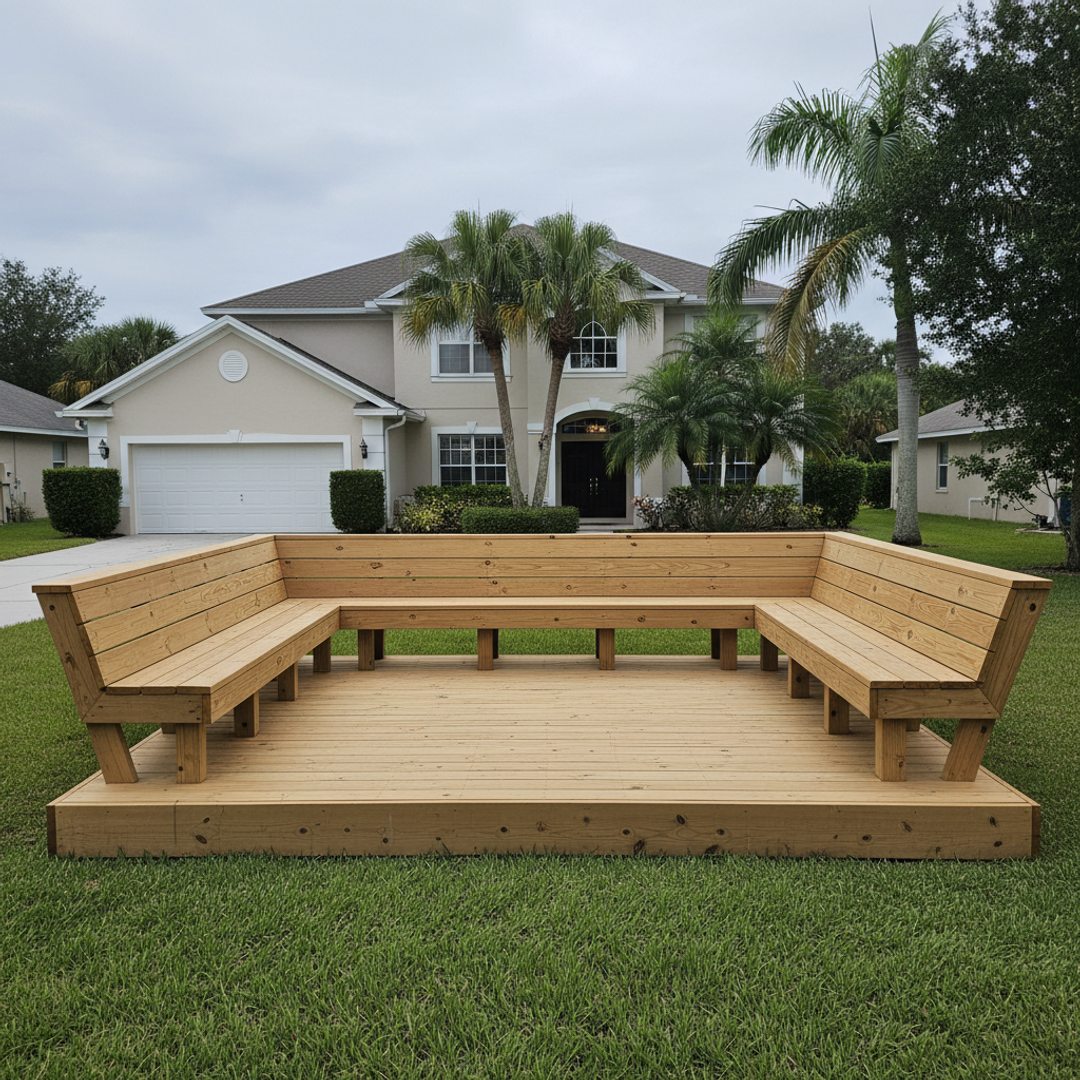
Multi-level decks, built-in bench seating, pergolas and stairs get laid out around how your yard actually slopes, not a stock plan. A sketch and a written quote come before any lumber gets ordered, so changes happen on paper instead of after the framing is up.
Soft boards, a railing that wiggles when you lean on it, and steps that bounce are the calls we get most. Sometimes it's one rotted joist under a sliding door, sometimes the whole ledger board has to come off and get reflashed.
When the frame underneath is still solid but the decking on top has cupped, splintered or gone gray, the old boards come off and new ones go on the existing structure. It costs less than a full rebuild and it's usually a one or two day job.
Composite boards from brands like Trex and TimberTech skip the annual staining and hold up better to Florida humidity than pine. Hidden fastener systems keep the screws out of sight, and hollow-core boards call for proper joist spacing underneath so they don't sag between supports.
Pressure-treated pine grays out and starts absorbing water within a year or two if it's left bare, so a stain and sealant coat every two to three years keeps the boards from cupping and splitting. Pressure washing comes first to strip mildew and old finish before anything new goes on.
Railings get built to code height with balusters spaced so a 4-inch sphere can't pass through, the actual rule inspectors check. Wood, aluminum and cable rail systems are all options depending on the look and the upkeep you want to deal with later.
Decking around a pool deals with constant splash, chlorine and bare feet on hot boards, so material choice matters more than usual. Composite and certain hardwoods handle that better than standard pressure-treated pine, and drainage gets planned so water doesn't pool against the house.
Some decks are past patching, with rotted framing, rusted hardware and a ledger board barely hanging on. Those come down to the posts or all the way to the ground, get hauled off, and get rebuilt to current code instead of matching whatever was there before.
Adding a screen enclosure over an existing or new deck cuts down on mosquitoes and afternoon sun without closing the space in completely. Framing has to be sized to carry the screen structure's weight and wind load, which is different from an open deck's framing.
Four steps, and no surprises in any of them.
You tell us what you want doing, we look at what is actually there, and we ask the awkward questions early.
In writing, itemised, free. If something might add cost later we flag it now rather than at the end.
Same crew throughout. We cover your floors, keep the dust down and tidy up before we leave each day.
You point out anything you are not happy with and we fix it before the invoice, not after.
Deck crews working throughout Polk County and into the Tampa area.
The details that come up once a deck project is actually underway.
Describe the problem and we will tell you what it probably is. No obligation.