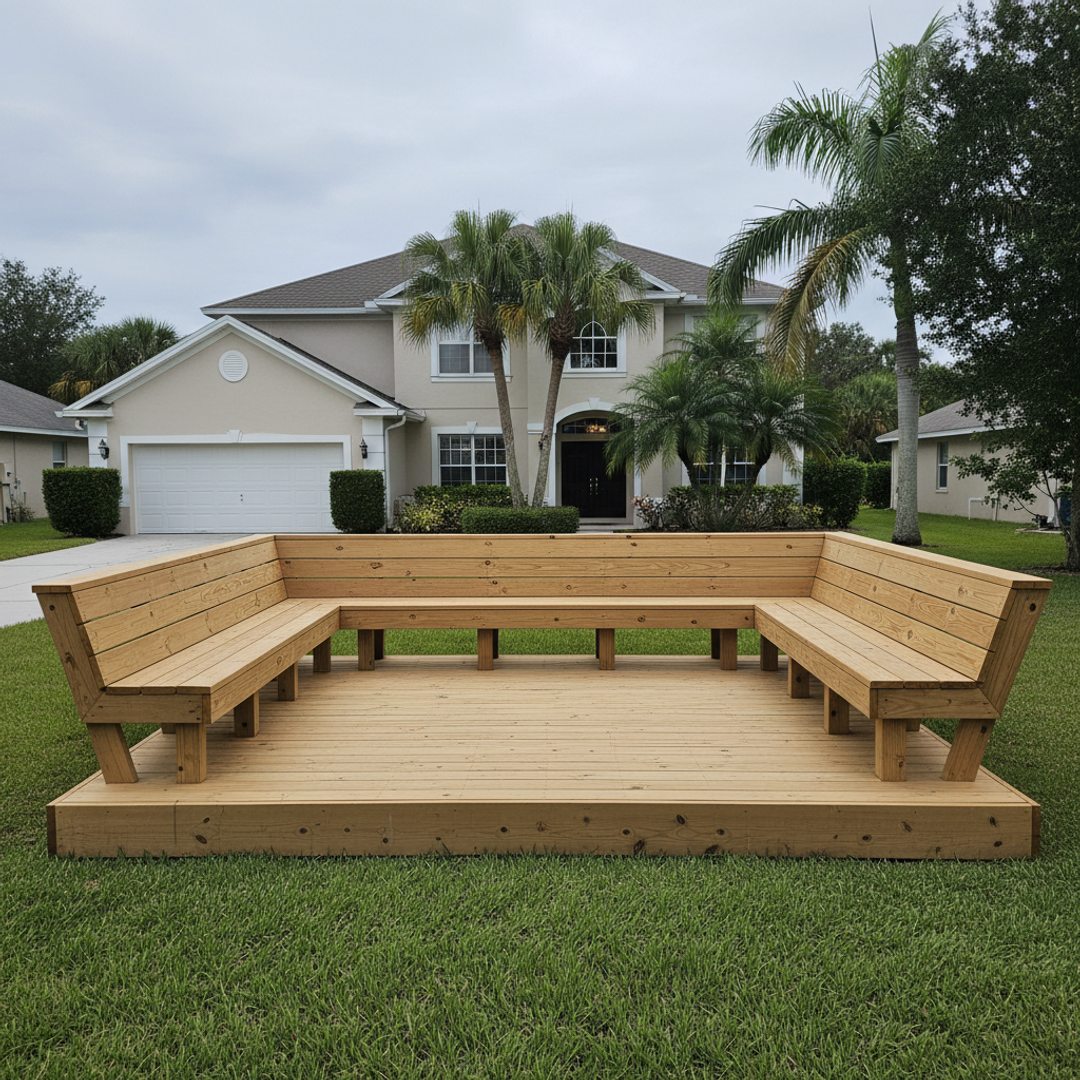
People ask this like it's a comfort question, when to be outside hammering nails without sweating through your shirt. That's part of it. But timing a deck project in Lakeland is really about concrete cure, wood moisture, and whether a sealant gets 48 dry hours before the next storm rolls in off the Gulf. Get the season wrong and you're not uncomfortable, you're redoing work.
Why the calendar actually matters here
Concrete footings need water to cure properly, not sun. In July heat, a sonotube footing can skin over on top in a day while the core underneath is still soft, and that mismatch is how you get surface cracking. We keep footings damp and shaded for the first few days no matter the month, but in summer that takes more effort and more water than it does in January.
Pressure-treated lumber comes off the truck wet, sometimes 25% or more moisture content straight from the treatment plant. It has to dry down closer to 15% before stain or sealer will actually bond instead of sitting on the surface and peeling within a year. In Lakeland's humidity, that drying window stretches out. A board that dries in 3 to 4 weeks in February might take 6 or more in August because the air itself is already carrying moisture.
The dry season advantage, roughly October through May
Central Florida's dry season runs from about October to May. Humidity drops, afternoon storms mostly stop, and daytime highs sit in the 60s and 70s for a good chunk of it. This is the window where staining and sealing actually make sense, because the finish gets real dry time before rain has a chance to wash uncured product off the boards. We generally want at least 48 hours of no rain after a fresh coat, sometimes 72 for oil-based products, and in dry season that's an easy ask. In July it's a gamble.
Footing and framing work goes faster too. Sandy soil, which is most of what you're digging into around here, drains fast, so a rain delay doesn't leave a foundation hole full of standing water for three days like it might in heavier clay soil up in Georgia. But it drains fast in dry season and slow in a downpour, and dry season just gives you fewer downpours to deal with.
Why summer isn't actually off the table
June through September is Lakeland's wet season, and June 1 through November 30 is hurricane season on the books, so those two overlap for the worst stretch. Afternoon thunderstorms are close to a daily event by July, usually rolling in around 2 or 3 PM. That doesn't mean nobody builds decks in summer. It means the schedule changes shape. Crews start early, get footings and framing done before the storm cell builds, and treat the afternoon as dead time.
Composite decking actually holds up fine to a summer build schedule, better than wood in some ways, because there's no staining step waiting on a dry window. If a homeowner wants to move forward in July and doesn't want to wait until October, composite is usually the more forgiving material to build with that month.
What the ground and the neighborhood do to your timeline
Most of Lakeland sits on sandy soil that drains well, which is good news for footings almost everywhere in town. Get close to Lake Hollingsworth, Lake Morton, or Lake Parker, though, and the water table comes up. A footing dug near a lakefront lot can hit water at a shallower depth than one three streets back, which changes how deep we need to go and sometimes calls for a different footing approach entirely.
The age of the neighborhood matters too. Streets around Dixieland and the Lake Morton Historic District were built mostly from the 1920s through the 1950s, and those houses often have older ledger boards, older slab foundations, and not much HOA oversight, so the paperwork side moves quicker. Newer subdivisions south of town toward Christina and Providence usually have an HOA architectural review to get through before the city permit even gets submitted, and that can add two or three weeks you should build into your schedule regardless of season.
Permits, inspections, and working backward from the date you actually want
Deck permits in the Lakeland area go through the City of Lakeland or Polk County depending on where the lot sits, and most jurisdictions require a permit once the deck attaches to the house or sits above a certain height, commonly around 30 inches off grade. Expect at least two inspections, one for footings before any concrete gets poured and one for framing before the decking boards go down. None of that is fast in any season, so if you want to be grilling on a finished deck by Memorial Day, the permit application needs to go in well before spring, not after the first warm weekend makes you want one.
A rough month-by-month read
- October through February: best stretch for staining and sealing, mild temps, lowest rain risk.
- March through May: still dry, gets warmer, good for new builds and footings before the wet season starts.
- June through September: workable for framing and composite installs if you build around the afternoon storms, tough on any wood finish that needs dry cure time.
None of this means summer is off limits, it just changes what kind of job makes sense and how the crew has to move. If you're weighing a new build against a repair or a resurfacing job and want to talk through what the season means for your specific lot, New Look Deck Co can walk through it with you before you pick a date.