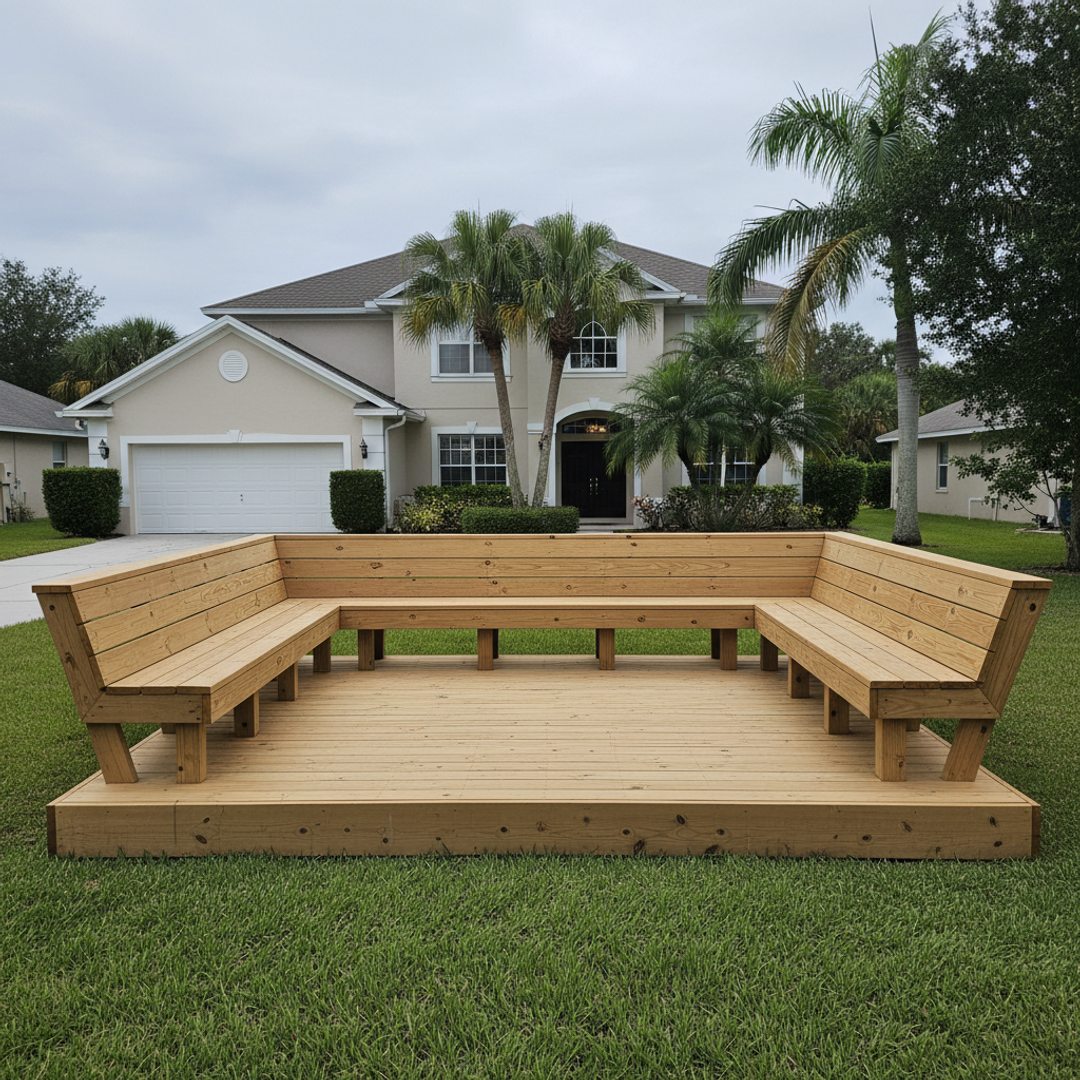
Anybody with a truck and a nail gun can call themselves a deck builder in Polk County. Some of them are good. Some of them will pour a footing 6 inches into loose sand, frame it up fast, and be three jobs away by the time it starts rocking. This post is about telling the two apart before you sign anything.
Lakeland's soil is mostly sand, sometimes with a layer of clay or muck underneath depending on how close you are to one of the lakes. Sand drains fast, which is good, but it doesn't hold a footing the way clay or loam does unless you go deep enough and wide enough. Florida code generally wants footings on undisturbed soil, poured below grade, sized for the load above them. A builder who eyeballs footing depth instead of checking it is guessing with your deck's foundation.
Ask how they handle the ground under the deck
Before you talk about railing styles or decking material, ask what the footings look like. How deep, how wide, concrete or precast, and how they're spacing the posts. A deck with 4x4 posts on 8-foot spans is going to feel different underfoot than one built on 6x6 posts every 6 feet. If the answer is vague, that's a tell. If they mention checking for soft spots or old fill before they dig, that's a good sign, because a lot of lots around here have been backfilled at some point and you don't always know what's under the grass.
Ledger board attachment matters just as much and gets skipped more than it should. The ledger is the board bolted to your house that the whole deck hangs off of. It needs flashing behind it so water doesn't run into your wall framing, and it needs to be through-bolted or lagged into solid framing, not just nailed to siding. On older homes in areas like Dixieland or around Lake Morton, that framing might be true dimensional lumber from the 1940s or 50s, which changes what fasteners and spacing actually work. A builder who's done a few of these knows to check what's behind the wall before they start drilling.
Permits aren't optional and a good builder won't suggest skipping them
Decks in Lakeland typically need a building permit, whether that's through the City of Lakeland or Polk County depending on where the property sits. Inspections usually cover the footings before you pour, the framing before decking goes down, and a final once railings and stairs are in. If a contractor tells you a deck under a certain size doesn't need a permit, or offers to build it without pulling one to save time, that's a decision that comes back on you, not them, when you sell the house or file an insurance claim.
If your property backs up to a lake or is near a shoreline setback, there can be additional review. And if you're in one of the newer subdivisions south of town or off County Road 540A, there's a decent chance an HOA has its own rules on deck height, color, or how close it can sit to a property line, separate from the county's setback rules. A builder who's worked in your neighborhood before will usually know this without you having to explain it.
What the framing lumber and fasteners tell you
Pressure-treated pine is still the most common frame material here because it's affordable and it holds up if it's built right, but Florida humidity and our rainy season from June through September mean any wood surface stays damp longer than it would somewhere drier. That's why joist spacing, hardware, and flashing tape at every cut end matter more here than in a dry climate. Galvanized nails will rust and stain the wood within a couple of years. You want stainless or coated fasteners rated for treated lumber, and joist hangers to match.
If you're going composite for the decking boards themselves, ask how they're handling the gaps. Composite expands and contracts with heat, and Lakeland summers push deck surface temperatures well past 100 degrees in direct sun. A builder who doesn't leave the manufacturer's spec gap between boards is setting you up for buckling by year two.
Red flags worth walking away from
- They want full payment up front, before materials are even on site. A deposit for materials is normal. All of it, before any work starts, is not.
- No written contract, or a contract that doesn't list lumber grade, footing depth, fastener type, or a payment schedule tied to actual progress.
- They can't show proof of general liability insurance. If a post footing collapses during a pour or a worker gets hurt on your property, you don't want that landing on your homeowner's policy.
- They tell you permits aren't needed for a deck this size, without checking with the city or county first.
- They rush the estimate. A real quote for a deck usually means someone walking your yard, looking at drainage and grade, and asking about the house's existing framing before they give you a number.
What a decent process actually looks like
A builder who's done this a while will walk the site first and look at where water already runs when it rains hard, because Lakeland gets some serious downpours in summer and a deck built in the wrong spot turns into a low point that holds standing water. They'll ask if you want a screened combo down the line, because that changes footing sizing now even if you're not building the screen enclosure yet. They'll give you a rough timeline, and a decent one for a standard deck once permitted is somewhere around 1 to 3 weeks depending on size and weather delays, which around here usually means afternoon thunderstorms in July and August more than anything else.
Get two or three quotes if you can, but compare them on footing depth, fastener spec, and what's included in the price, not just the bottom line number. A cheaper quote that skips flashing or undersizes the footings isn't actually cheaper once you're paying to fix it in five years.
We walk every site before we quote it, and we'll tell you straight if something about your yard or your house needs a different approach than the neighbor's deck three doors down. If you want to see how we handle it, our deck builder work is listed at New Look Deck Co.